
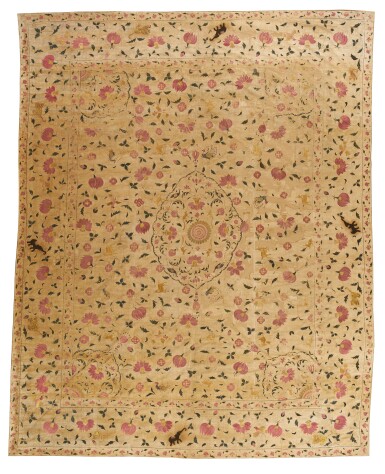
An embroidered summer carpet or coverlet, North West India, Gujarat, 18th century
Estimate
8,000 - 12,000 GBP
Lot Details
Description
of rectangular form, embroidered with silk thread on a beige cotton ground, the central field with a central cusped medallion and palmettes at corners, profusely decorated with birds and animals amidst scrolling tendrils bearing flowers and leaves, the border similarly decorated
268 by 327cm.
Gujarati embroideries of this quality were used within the Mughal court or exported to Europe from the sixteenth century onwards. Mughal miniatures often depict courtiers seated on embroidered silk ground textiles that were used during the summer months as a cooler alternative to carpet.
Fine chain stitch embroidery of this type was produced by male embroiders from the Mochi community in Gujarat who originally worked on leather items. It was soon adapted to be used to embroider cloth. The Portuguese were initially responsible for introducing these fine embroidered textiles to Europe with the trade continuing into the seventeenth and eighteenth centuries under the supervision of the East India Company. The East India Company exported these embroidered works from the port of Cambay, they hence came to be known as ‘Cambay embroideries’.
There is a richly embroidered wall hanging from Gujarat dated to c.1680-1700 with comparable scrolling blooms and multi-coloured birds and animals in the Victoria and Albert Museum (IS.155-1953; R. Crill ed., Fabric of India, exhibition catalogue, London, 2015, p.70, pl.9). For an eighteenth-century summer carpet with similar floral decoration sold in these rooms, see Sotheby’s London, 9 April 2008, lot 241.


