
Beringer, Johann Bartholomaeus Adam, and Georg Ludvig Hueber | Lithographiae wirceburgensis
Lot closes
December 12, 07:19 PM GMT
Estimate
4,000 - 6,000 USD
Current Bid
3,200 USD
1 Bid
Reserve met
We may charge or debit your saved payment method subject to the terms set out in our Conditions of Business for Buyers.
Read more.Lot Details
Description
Beringer, Johann Bartholomaeus Adam, and Georg Ludvig Hueber
Lithographiae wirceburgensis, ducentis lapidum figuratorium a potiori insectiformium, prodigiosis imaginibus exornate specimen primum. Wurzburg: Mark Anton Engmann [for] Philipp Wilhelm Fuggart, 1726
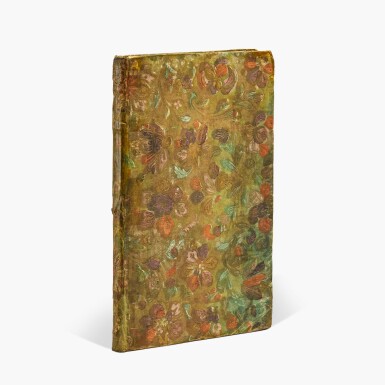
Folio (321 x 210 mm). Engraved title-page, 21 engraved plates. With the signature of "Corollaries" at the end (see Norman) and errata. Contemporary buntpapier wrappers; somewhat rubbed, portion of spine restored.
First edition, first state, with the corollaries; infamous fossil hoax. Beringer was a professor at the University of Wurzburg who sometimes lectured on natural history, referring to "petrifactions found in the Wurzburg Musselkalk, from which he collected fossil shells for his cabinet" (DSB). Two of Beringer's colleagues at the university perpetuated a hoax on him by hiding stones of shell lime that had been carved into various shapes around Mount Eibelstadt. Known as the "Lying Stones," these artifacts became infamous among antiquarians. The present volume publishes illustrations of the "fossils" and includes the text of Corollaries by Hueber, a young colleague of Beringer. The two gentlemen who created the hoax were taken to court by Beringer even though they had attempted to dissuade him from publishing the present volume. Perhaps the most revealing section of Beringer's text can be found on pages 65-66, in which he exclaims the "hand of Nature" had written characters in Greek, Latin, and Hebrew, including actual "rabbinical" and "cabalistic" words. Ever hopeful, Beringer exemplified the sad reality of confirmation bias, continued to seek justifications for the veracity of his “finds”. He attributed the presence of the Hebrew text to the proximity of an ancient Jewish cemetery close to the place where the specimens were found: “Light … is a flow of minute solar particles … that has the truly marvellous faculty of depicting, portraying and forming the images of the bodies that it falls on in its flow. Could it not also be supposed that it has a certain active and creative power of imprinting on suitable matter the same forms which it has already taken the impression?” (H.P. Powell in Fake? The Art of Deception, ed. Mark Jones with Paul Craddock and Nicolas Barker, 1990, no. 78). Other indications as to the inauthenticity of the "fossils" are revealed by the unlikely, fanciful nature of the images themselves: a spider in its own web, a bee perched on an intact flower, and a wormlike creature with a smiling face – all very obvious in this clean, bright copy.
REFERENCES
Nissen ZBI 330; Norman I:195
PROVENANCE
Joseph A. Freilich (bookplate; Sotheby's New York, 10 January 2001, lot 49)
Please note title is stuck to frontispiece with some kind of adhesive residue
You May Also Like


![[Venice] Ordini delli advocati della città di Vinetia, Venice, 1537, contemporary Venetian Fortuna binding](https://dam.sothebys.com/dam/image/lot/d3ecd25c-a103-4240-bb8e-da9d917db123/primary/extra_small)


