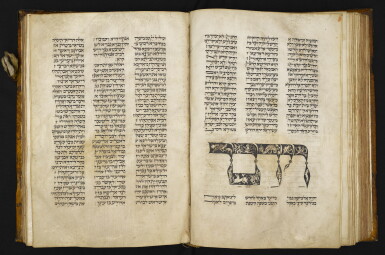
A Monumental Decorated Ashkenazic Pentateuch with Targum Onkelos, the Five Megillot, and Haftarot, Germany, Circa 1300
Estimate
2,000,000 - 4,000,000 USD
Lot Details
Description
A Monumental Decorated Ashkenazic Pentateuch with Targum Onkelos, the Five Megillot, and Haftarot, Germany, Circa 1300
Ink on parchment, 336 folios
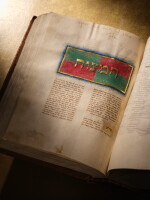
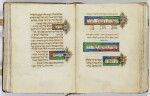
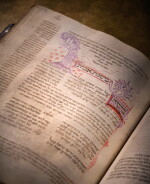
Created in Germany around 1300, this monumental Hebrew Bible is an extraordinary expression of the artistic and intellectual culture of medieval Ashkenaz. Its imposing format and stately columns of Hebrew script give visual authority to the biblical text, while magnificent initial words transform the letters themselves into works of art. Executed in the distinctive spare-ground technique, in which figures, animals and fanciful hybrids emerge from areas of parchment left unpainted against a dark ground, the letters teem with fantastic creatures and lively hunt scenes. Such imagery draws upon the visual vocabulary of contemporary Gothic art—where hunting animals, grotesques, and hybrids were ubiquitous—yet is ingeniously adapted to the forms of the Hebrew alphabet. The result is a remarkable synthesis of sacred text and secular imagery, revealing the extent to which Jewish scribes and artists participated in the broader artistic culture of medieval Germany while creating a visual language distinctly their own. Monumental Bibles with inhabited letters such as this are extremely rare, only a handful are known to exist, and this is the only one in private hands.
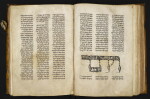
The manuscript contains the text of the Pentateuch (the Five Books of Moses) accompanied by an Aramaic translation known as the Targum. That the Hebrew text was translated into its sister language, Aramaic, may seem surprising at first glance, but can be explained by the fact that in the period after the destruction of the Second Temple (70 CE), the people were sometimes more proficient in Aramaic than in Hebrew so the Aramaic translation was read in the synagogue, in tandem with the Torah on Sabbath mornings, as late as the 10th century. In addition, the massive volume includes the five Megillot (each read on a different Jewish holiday or fast day) and the Haftarot (selected portions from the books of the Prophets that are read publicly in the synagogue immediately after the weekly Torah reading on Sabbaths, festivals, and fast days).
The prosperity of Jewish communities along the major trade routes of medieval Germany gave rise to wealthy patrons capable of commissioning magnificent Hebrew manuscripts. With folios measuring 45 cm in height, it is one of the largest known Hebrew Bible manuscripts extant. By the late thirteenth century, monumental Bibles such as this one may have functioned not only as books for study but also as expressions of wealth and prestige. Private individuals commissioned these codices of extraordinary size, which required large quantities of costly parchment as well as extensive scribal labor (more than 300 animal skins were needed for the production of the parchment alone!). The finished bible proclaimed the importance of both the sacred text and its patron.
Photographs courtesy of Ardon Bar-Hama
You May Also Like