
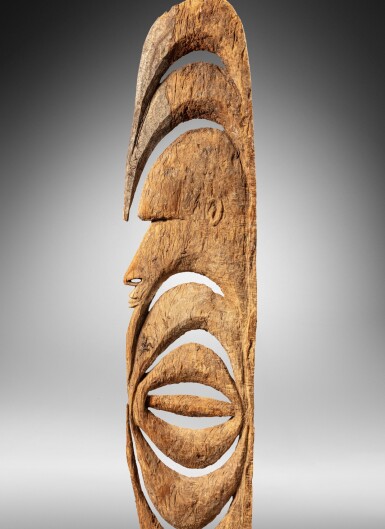
Yimam Yipwon Figure, Karawari River, Middle Sepik, Papua New Guinea
Lot closes
December 10, 04:13 PM GMT
Estimate
8,000 - 12,000 EUR
Starting Bid
5,500 EUR
We may charge or debit your saved payment method subject to the terms set out in our Conditions of Business for Buyers.
Read more.Lot Details
Description
Yimam Yipwon Figure, Karawari River, Middle Sepik, Papua New Guinea
Haut. 192 cm, Large. 26 cm ; Height. 75 ½ in, Width. 10 ¼ in
Collection of Count Jean-Jacques de Launoit, Brussels
Passed down by descent
Masterpieces from the Korewori River region, the Yipwon sculptures of Papua New Guinea are powerful ritual objects whose shapes and outlines profoundly influenced Western artists of the 20th century. According to oral tradition, they were born from the splinters of the first split gong carved by the Sun spirit. Turned into spirits and then punished for transgressing the cosmic order, the Yipwon remained on earth as protectors of hunting and warfare. At night, they would emerge to subdue the souls of game animals or enemies, enabling their capture the following day. If the ritual was successful, the figure would receive blood or offerings; if it failed, it was abandoned. This spiritual charge is expressed formally: one head and a single leg framing a stylised body made up of concentric hooks around a central core symbolising the heart or soul - a means of displaying both the inner and outer aspects of the body simultaneously.
Introduced in the West in the 1950s, these figures fascinated audiences with their radical conception of the human form. Their structure and symbolic power immediately struck a chord with many of the great modern sculptors in their creative research. Henry Moore’s Three Points sculpture (1939) presents a Yipwon-like nuclear structure, with hooks converging towards a core materialising the invisible force animating the figure. The slender figures of Alberto Giacometti can also be linked to Ypwon sculpture, similarly questioning the essence and fragility of humanity; much as Brancusi's pared-down outlines, through which he sought the inner truth of things. On show at the Three Regions of Melanesian Art exhibition in New York in 1960, thanks to Nelson Rockefeller, the Yipwons opened up a new visual field: a rethinking of the body not as a simple shell but rather as energy and rhythm.
This sculpture, imbued with Melanesian spirituality, had a profound influence on the Western avant-garde and now stands as one of the universal landmarks in the history of form.
You May Also Like


